Key points
Marketplace revenue is valuable only if stock, product data, and fulfilment stay controlled.
The catalogue should remain the source of truth for publish state, listing type, and channel readiness.
Orders from each channel should land in the same invoice, picking, and fulfilment workflow.
The marketplace trap
Adding eBay or Amazon can create revenue quickly, but it can also multiply admin. Staff end up checking one dashboard for marketplace orders, another for the website, another for POS, and then manually deciding which stock number to trust.
That is how overselling, duplicate listings, inconsistent pricing, and late dispatches start. The business grows, but the operating model gets weaker.
Use the ERP catalogue as the publishing authority
A marketplace integration should begin with catalogue governance. Products need categories, images, pricing, stock position, publish status, policies, and channel-specific readiness before they are pushed outward.
If the ERP is the source of truth, each channel becomes a selling surface rather than a separate business system.
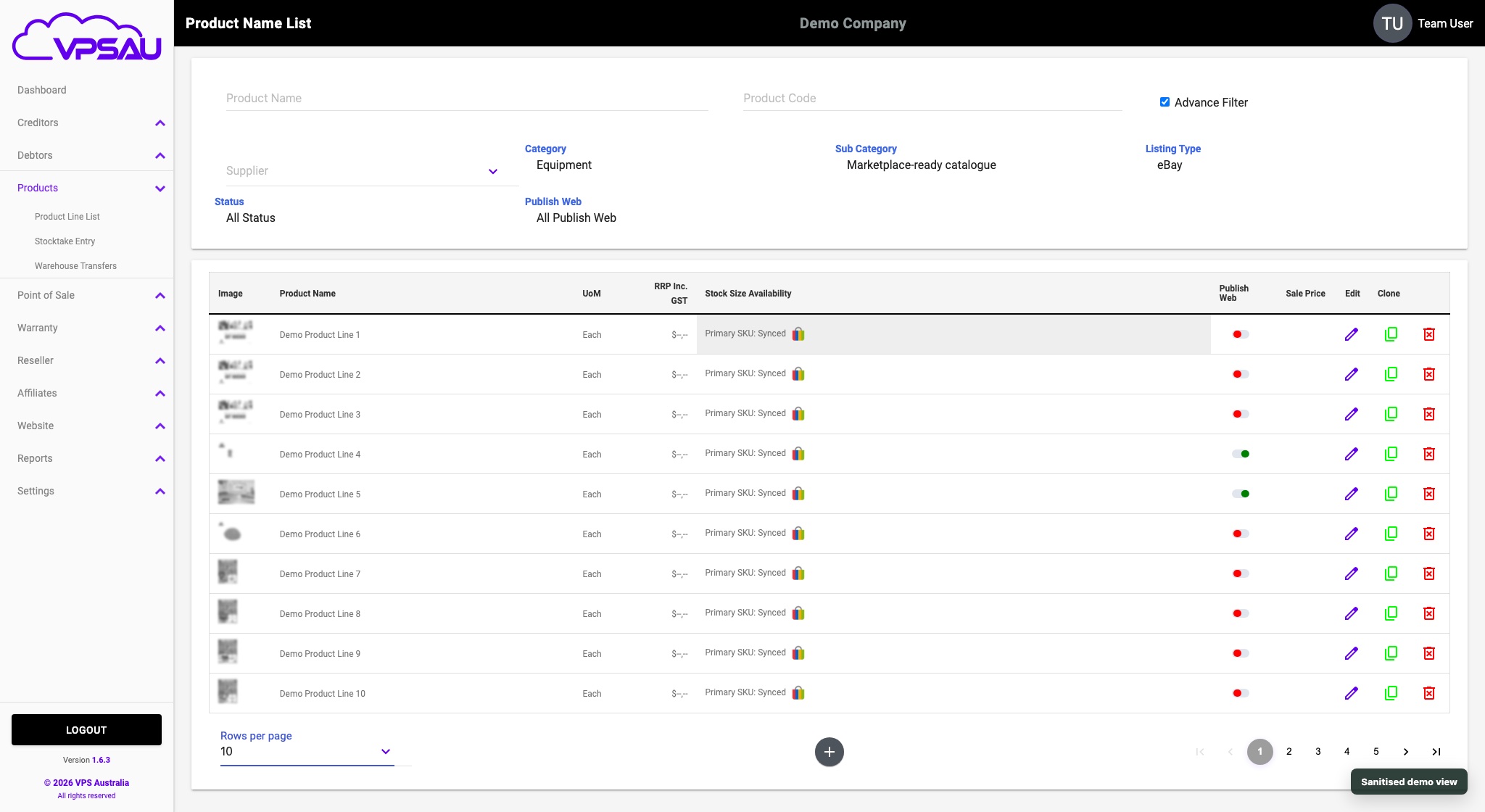
Filter products by category, publish state, and listing type.
Keep stock governed by the ERP instead of channel-specific guesses.
Track which products are ready for eBay and marketplace workflows.
Keep product images and descriptions connected to the operational record.
Order flow matters as much as listing flow
The hardest part of marketplace selling is not always listing products. It is making sure marketplace orders enter the same operational process as every other order.
A good workflow should create the invoice, picking work, shipment tracking, stock movement, and reporting trail without staff re-keying the order into the ERP.
Orders land in the same operating system.
Warehouse teams work from one fulfilment queue.
Managers can compare channels without exporting spreadsheets.
Customer service can see order status without hunting through seller portals.
Why this is a VPS Foundation Suite advantage
VPS Foundation Suite was built around eCommerce-first principles, not treated as a later add-on. That is important for businesses that need POS, websites, marketplaces, debtors, inventory, and invoices to share one logic layer.
For Australian businesses expanding through marketplaces, the value is operational control: more channels without more manual reconciliation.