Cloud commerce ERP platform Australia
One ERP. One API. Many buying experiences.
VPS Foundation Suite connects the channels customers buy through with the operational records your team depends on: products, stock, debtors, invoices, picking, fulfilment, warranty claims, Xero-connected workflows, YouTube learning content, and reporting.
Front office
POS and websites
Serve walk-in customers and online shoppers without splitting product, stock, and order logic.
Trade customers
Debtor ordering portal
Let account customers place orders through a familiar shopping experience tied to ERP workflow.
Channel growth
Marketplace-ready
Interface with eBay and Amazon without making each channel a separate operating island.
After-sales
Warranty lifecycle
Keep claims, product context, correspondence, assignments, decisions, and audit history connected.
Content growth
YouTube learning hub
Surface a tenant's videos and Shorts inside the website, then connect education back to products.
Dedicated retail POS
Need store operations without the full ERP and channel layer?
VPS RetailGrid is the focused POS option in the VPS family: multi-store sales, stock, customer loyalty, staff controls, and store reporting for retailers who do not need website, eBay, Amazon, or marketplace integration workflows.
ERP control room
Proof that the back office is part of the product.
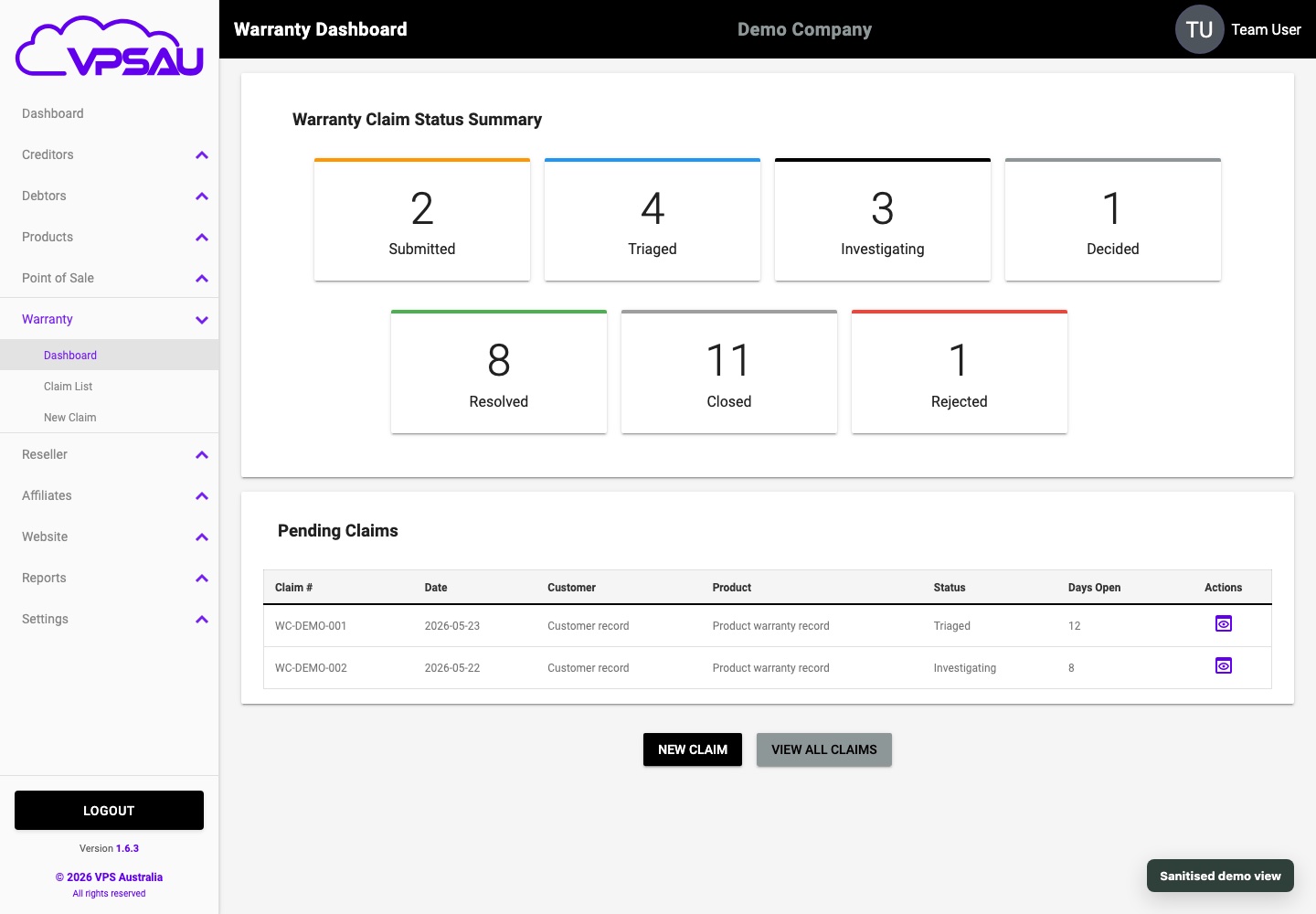
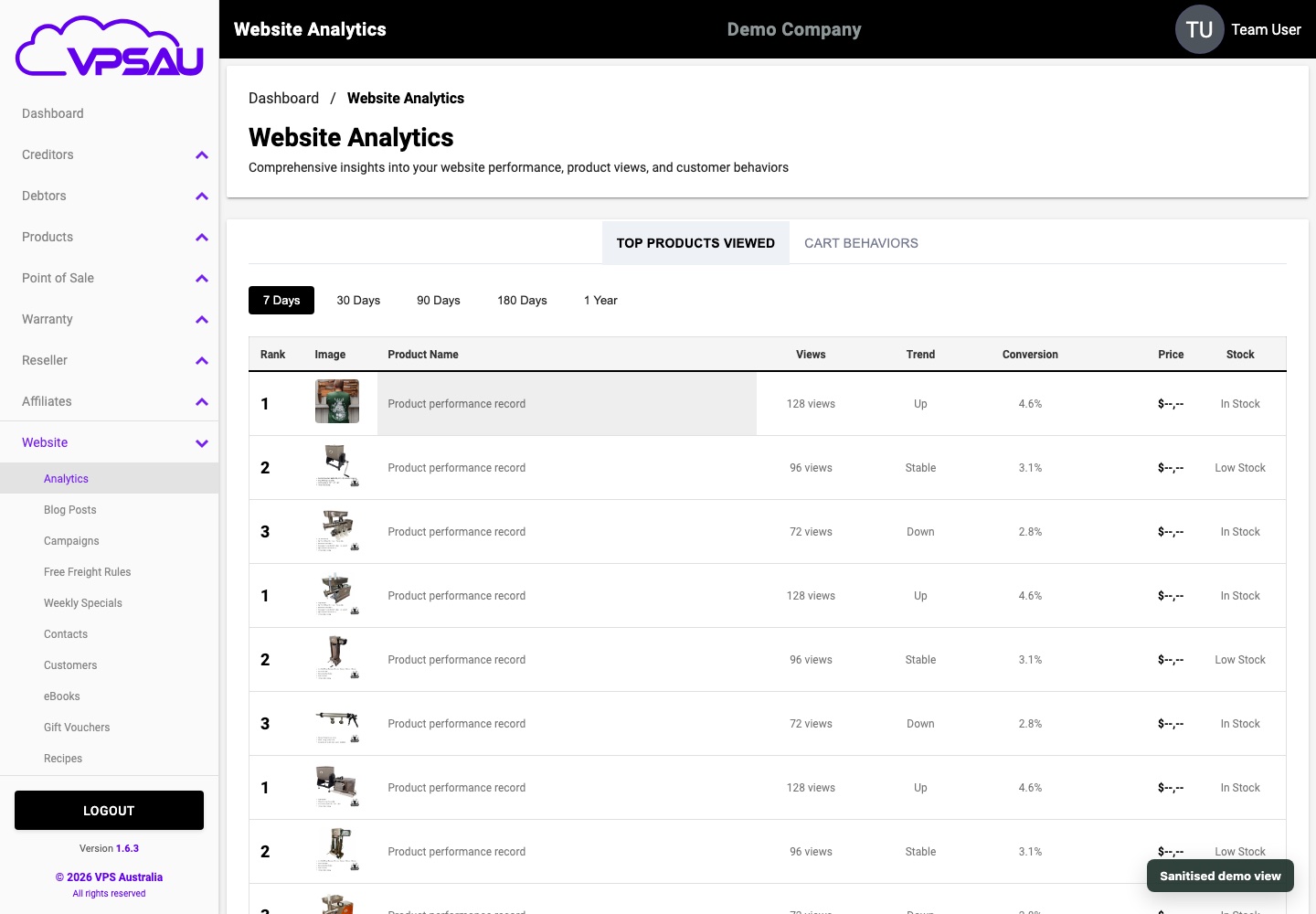
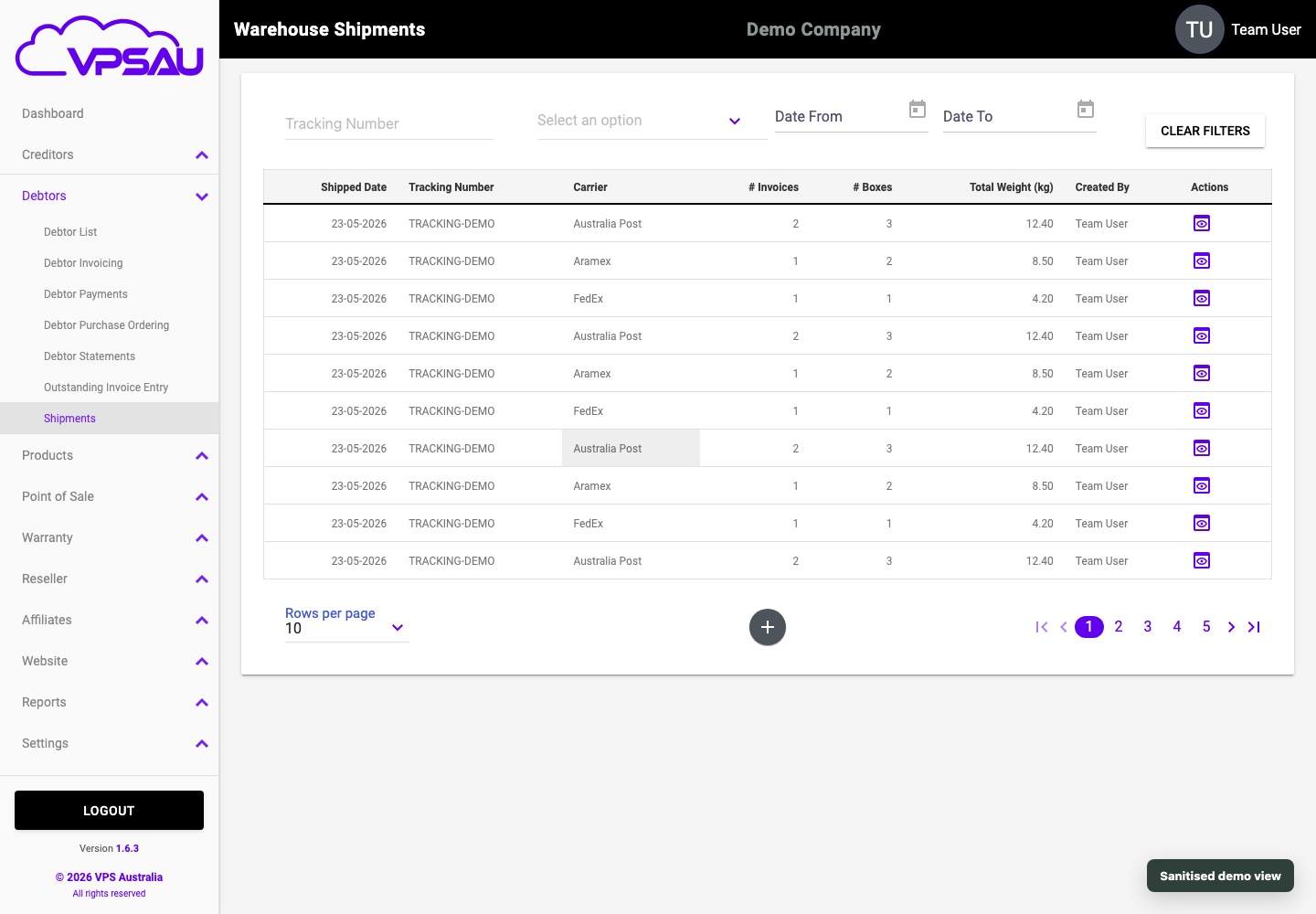
The sales story is stronger when prospects can see the operational screens behind the storefront: warranty status, website analytics, fulfilment, vouchers, and the ERP records that keep work moving.
Service lifecycle
Warranty claims have status, ownership, evidence, and resolution context.
Website intelligence
Product views and customer behaviour sit beside commerce operations.
Fulfilment control
Shipment tracking stays connected to invoices, boxes, carriers, and staff activity.
Google Analytics integration
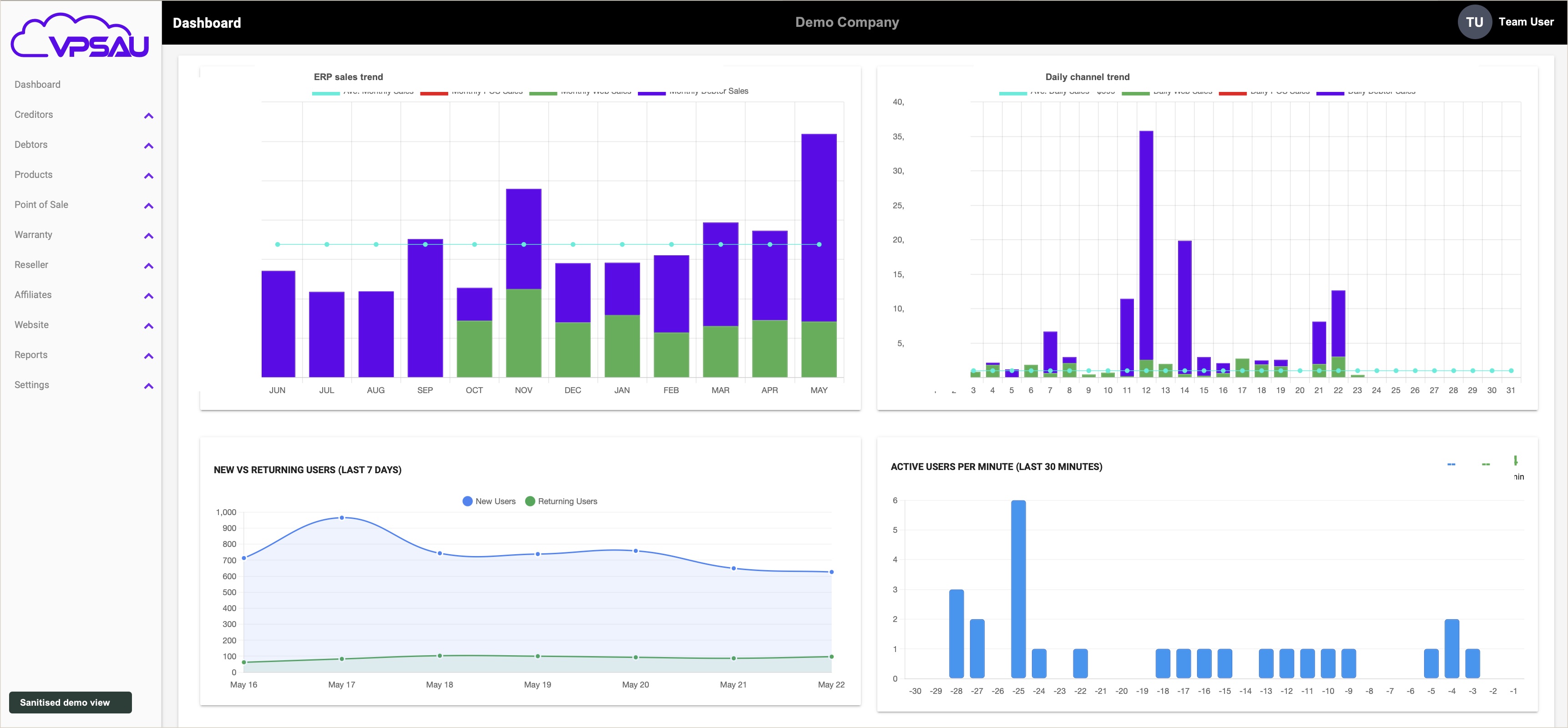
Website behaviour belongs beside operational reporting.
VPS Foundation Suite can surface web sales trends, visitor behaviour, new versus returning users, and active user activity inside the ERP dashboard so website performance is visible alongside commerce operations.
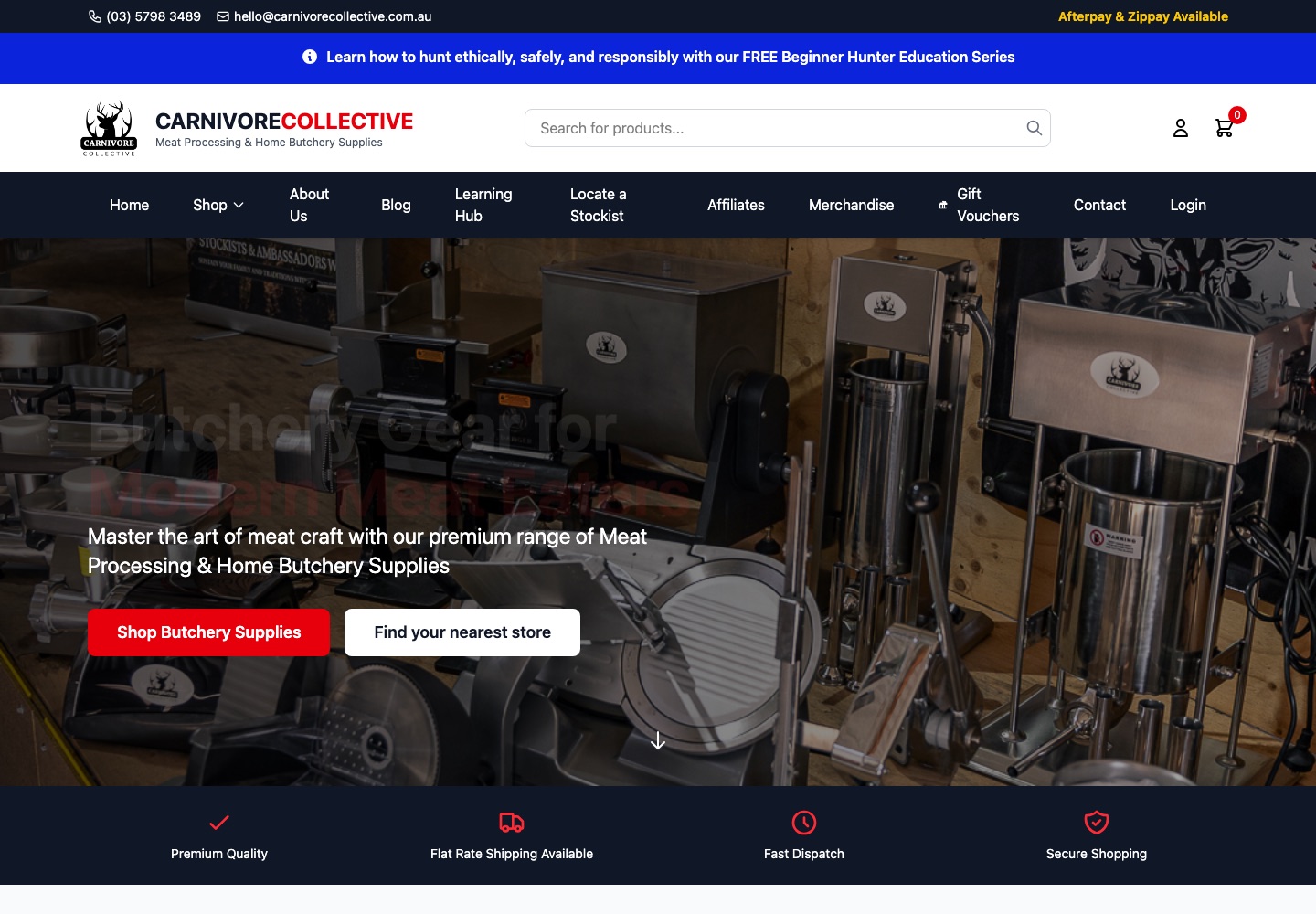

Tenant website layer
The same foundation can present different brands to market.
The website layer is not a generic skin. Each tenant can carry its own storefront, catalogue, campaigns, YouTube video learning hub, gift vouchers, SEO pages, and shopping experience while still feeding the common ERP/API backbone.
Architecture
One ERP. One API. Many buying experiences.
The architecture is designed so public tenant websites and portals can connect to a private shared API and common business logic layer. Sensitive implementation details are deliberately removed here; the point is the operating model.
Public experiences
Storefronts, customer portals, marketplace channels, and video learning content.
Private backbone
A shared API and business logic layer controls tenant-aware operations.
Operational system
ERP workflows, secure identity, data, assets, and reporting stay governed.
Public buying layer
Tenant websites
Brand-specific storefronts
Customer portals
Debtor and reseller ordering
External channels
Marketplaces and content platforms
Private platform backbone
Shared API server
Private service boundary
Common business logic
Products, stock, orders, debtors, invoices, and fulfilment rules
Tenant context
Each request is handled for the right tenant
Controlled operations
ERP back office
POS, inventory, warranty, fulfilment, analytics, and administration
Tenant data
Separated tenant records and reporting
Identity and assets
Secure access, images, documents, and published content
Green public commerce experiences
Blue private API and shared logic
Purple ERP, identity, data, and assets
ERP suite breadth
More than POS and eCommerce.
VPS Foundation Suite also manages the operational modules that sit around commerce: customers, debtors, creditors, promotions, loyalty, fulfilment, warranty, warehouses, YouTube-powered content, and integrations.
View all modulesCommerce growth
Affiliate, reseller, campaign, promotion, loyalty, gift voucher, and website customer management.
ERP operations
Creditor, debtor, inventory, POS, policy, warranty lifecycle, freight rate cards, and multiple warehouse management.
Fulfilment
Parcel and shipment tracking, drop shipping, picking workflows, warehouse transfers, and stock movement control.
Content and integration
Learning hub content, YouTube videos and Shorts, Xero, eBay, Amazon, eCommerce, Google Analytics, websites, and SEO optimisation.
Operational result
Less intervention between order and invoice.
The target is simple: when customers place orders, the system should be able to create the right ERP work without staff having to rebuild the order manually.