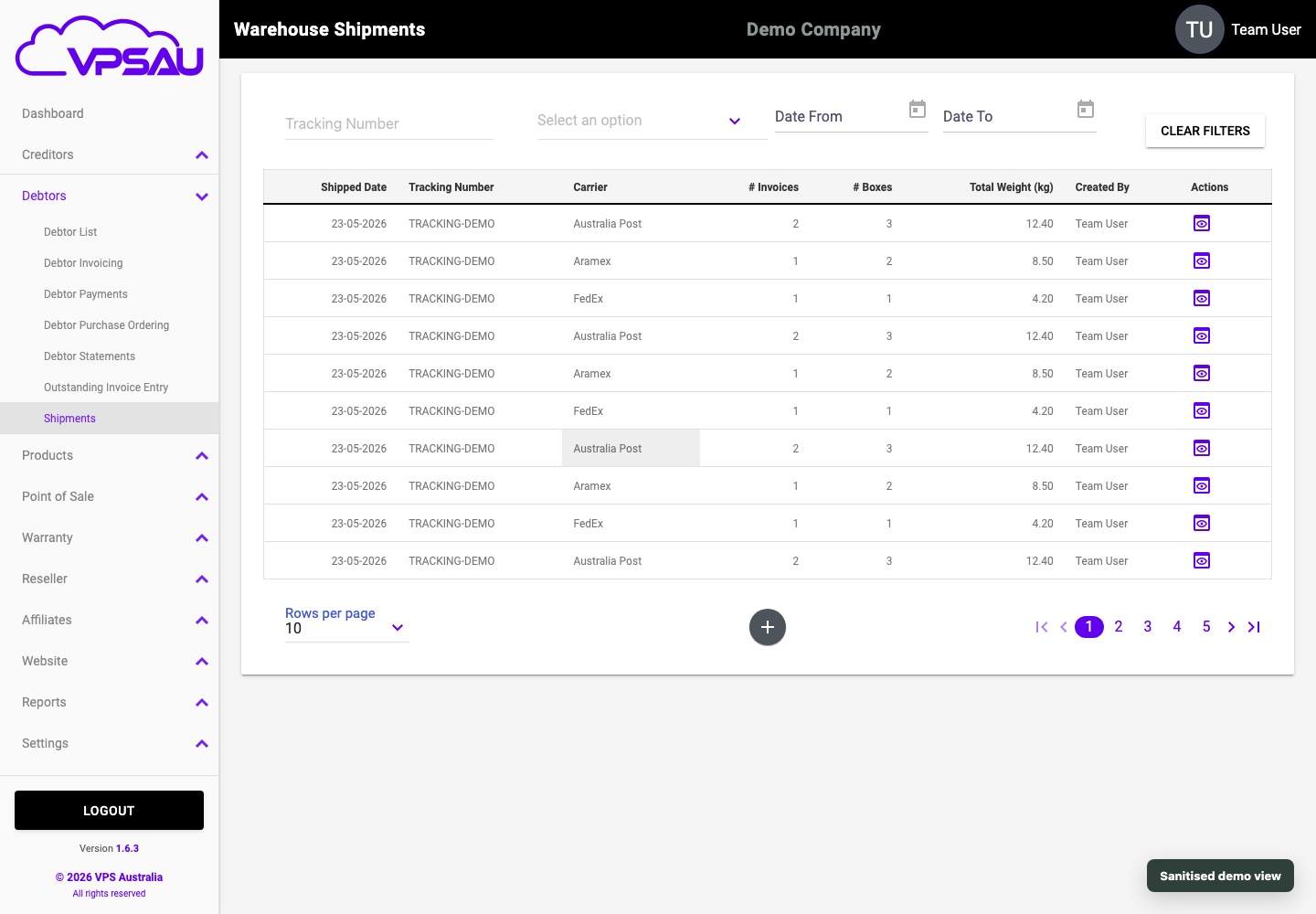
Multi-location retailers and stock-led operators
Multi-location inventory management for stores, warehouses, POS, and eCommerce.
VPS Foundation Suite delivers unified multi-location inventory management for Australian retailers and wholesalers. Replace store guessing with real-time stock sync across POS, websites, and warehouses.
Inventory signal
One stock truth across stores, warehouses, POS, and online channels.
01 Location stock
See which store, warehouse, or fulfilment point can sell, pick, or replenish.
02 Transfers and stocktakes
Keep movement, adjustment, receiving, and count history attached to ERP inventory.
03 Channel availability
Let POS, eCommerce, account ordering, and marketplaces follow the same stock rules.
Who this is for
For retailers, wholesalers, and mixed-channel operators that need accurate stock across multiple stores, warehouses, websites, and marketplace channels.
Staff cannot trust which store or warehouse has available stock
Online orders, POS sales, transfers, and stocktakes update different records
Managers discover stock problems only after oversells, lost sales, or manual reconciliation
What VPS Foundation Suite connects
The workflow stays attached to the ERP record.
The value is not another screen. It is keeping the surrounding operational context together so staff are not forced to reconstruct the truth from separate systems.
Product and variant inventory across stores, warehouses, and fulfilment locations
Stock movements for sales, returns, receiving, transfers, adjustments, and stocktakes
ERP availability rules for POS, eCommerce, debtor portals, and marketplace publishing
Operational history that links stock changes to orders, invoices, users, and locations
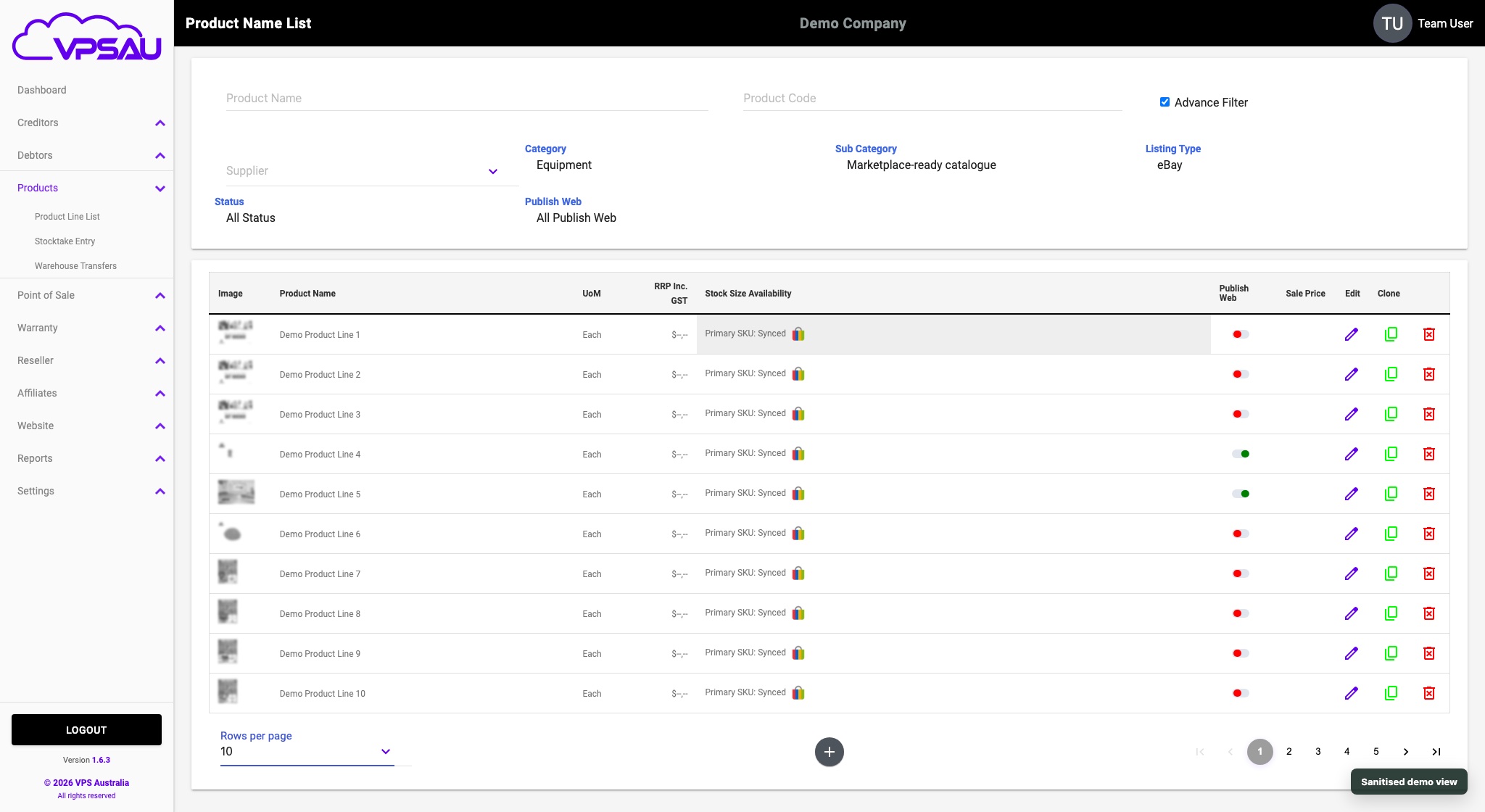
Store stock
Know which location can sell, pick, transfer, or replenish.
Movement history
Track sales, returns, goods-in, adjustments, and transfers.
Channel rules
Keep POS, website, and marketplace availability governed by ERP stock.
Inventory proof
Multi-location inventory is an ERP problem, not just a POS feature.
The useful stock number is not simply what is on hand. It is what is available after POS sales, online orders, transfer commitments, goods-in, returns, stocktakes, and marketplace publishing rules have all had their say.
One product record across every location.
Stores, warehouses, and fulfilment locations should not create separate versions of the same SKU.
Transfers become controlled work.
A transfer should carry source, destination, quantity, reason, staff action, and movement history.
Availability stays attached to sales channels.
The ERP decides what POS, eCommerce, debtor ordering, and marketplace channels are allowed to sell.
What multi-location inventory management includes
The stock number needs the full operating story.
For a multi-location retailer, stock accuracy depends on more than counting items. The ERP has to understand location structure, product variants, transfer lanes, receiving, sales, returns, reservations, and channel availability rules.
Stock by location
Stores, warehouses, vans, and fulfilment points use the same product record.
Movement control
Every sale, return, receipt, transfer, and adjustment leaves history.
Available stock
The system separates what is on hand from what is safe to sell.
Channel availability
POS, website, account portals, eBay, and Amazon can follow ERP rules.
Related guides
A focused inventory SEO cluster, not one lonely page.
These guides answer the adjacent questions Google is already testing: inventory across multiple locations, stock transfers between stores, real-time stock by store, and POS inventory control.
Multi-location inventory management for retailers
The cornerstone guide for moving from disconnected stock records to one ERP stock truth.
Inventory management for multiple locations
How store, warehouse, POS, eCommerce, and fulfilment inventory fit together.
Stock transfers between stores
How transfers become controlled ERP stock movements instead of informal messages.
Real-time stock levels by store
Why available stock must include commitments, transfers, returns, and channel rules.
Multi-location inventory FAQ
Common questions from retailers comparing inventory systems.
What is multi-location inventory management?
It is the process of controlling stock across more than one store, warehouse, or fulfilment location so every sale, transfer, receipt, return, and adjustment updates one trusted inventory record.
Why is ERP better than a basic POS inventory count?
A basic POS count can show what one store thinks it has. ERP inventory connects that count to orders, invoices, transfers, receiving, online availability, marketplace publishing, reporting, and audit history.
How do stock transfers between stores work?
A controlled transfer records the source location, destination location, SKU, quantity, reason, reference, staff action, and movement history so both locations stay accurate.
Can online stock availability use the same store inventory?
Yes. In an ERP-led model, eCommerce and marketplace availability can be governed by the same stock position as POS, with rules for reserves, buffers, fulfilment locations, and channel publishing.
Expected outcome
A cleaner operating model, not another disconnected tool.
One stock truth across every selling and fulfilment location
Fewer oversells, fewer manual checks, and clearer transfer decisions
Inventory becomes part of the ERP workflow instead of a detached POS feature